

In today’s corporate and social ethos change has become synonymous with how we live—an everyday phenomenon. Of late, Digital Transformation has also permeated our everyday vernacular to signify how cloud computing and technology are increasingly becoming a regular part of ours. Artificial Intelligence (AI), Machine Learning, IoT, Robotics, Edge Computing, Block chain, and many other such advances in technology have made change inevitable. All these changes directly impact how we manage our everyday lives and how we work to earn our living.
These changes are not just affecting the corporate worker in high-tech, but also, as their impact is so pervasive and ubiquitous, that no one can escape their spread as they affect our everyday lives. Autonomous vehicles, remote medicine, cryptocurrency (Block chain) are some of the ways these technologies are invading our everyday lives and that is not going to change anytime soon; it’s only going to accelerate.
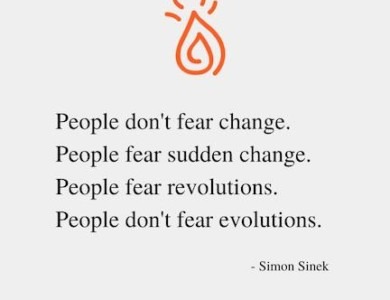
As these technologies take over how work gets done in companies, managing this change becomes an integral part of that process and a leadership responsibility. As the above quote by Simon Sinek reminds us that only when change is done in sudden and unthinking way by the leaders who are driving the change that we fear it. If it is managed well then it can transform our view of change and how we can embrace it to our mutual benefit. It is well known that nearly 75-80% of the major change initiatives—including Digital Transformation—do not result in providing the intended outcomes. Many are downright failures. Most of these failures stem from the inability of those in leadership positions to understand how change really works and what they are required to do on their part to make it successful.
This blog is about why driving change is a major management challenge in the corporate world today and what can be done by those who drive this change to make this not only a positive factor for those affected by it, but also to make it benefit to all those involved in its rollout to make it a success.
Below is the graphic that shows how any change takes effect. This graphic represents the typical factors involved in any change process and how those affected by this change react or respond to it. It is the response of those affected by this change that dictates its trajectory and success and not by what the change is per se. Anticipating, managing, and responding to those affected by the change is the sine qua non for any change initiatives to succeed. This graphic also shows what paths sudden change and managed change take.

So, what does a leader required to do to stay on top of the process and make any change successful? Here is the “secret.”
Let us walk through each of the stages of change—numbered here from 1 to 7 as we navigate through this process:
- Status
quo: This is
the quiescent state where things are in a rhythm for those engaged in what they
do and there is a certain familiarity and rhythm to how things get done. This
does not mean that everything is perfect and ideal, but that it is something
those involved in it are comfortable with how they deal with it. As new
alternatives become available to what is being done and how it gets done,
leaders need to evaluate them to be more competitive, more efficient, and more
cost-effective. These alternatives typically stem from emerging technologies
that allow managing the workflow with changes that involve new tools available
to do that same work in better ways. Sometimes these alternatives can be
disruptive.
The upward curve before we reach the second Drive stage of the change process stems from incremental changes—continuous improvement—that stem from inevitable tweaks people make as they find opportunities to improve what they deal with. Typically, these changes and improvements are small and often imperceptible in their everyday manifestations. - Drive (Change): This is when someone in the leadership position recognizes a new way to do things differently. Typically, it stems from some new technology, a new tool, or an entirely new way of doing the same thing using some different—even disruptive—approach. Thoughtful leaders take a careful look at how this change is going to affect people, processes, and perceived impact of the change on the customer—directly or indirectly. But most leaders are not that thoughtful, and to earn themselves some standing from their superiors they bulldoze this change without the careful thought and planning it needs to make it successful. This is one of the reasons why nearly 75% of change initiatives fail to deliver what is expected from them (see the Sudden Change path shown in the diagram).
- Deny: Often, how a change is
typically foisted on those intimately and directly affected by it results in their
natural and knee-jerk reaction, which is their rejecting it by denying to
themselves that it is happening. Typically, they respond by their resigned
attitude of how all these familiar management fads have been introduced with
big fanfare, only to be relegated to a trash heap when they do not deliver on
their promise. So, they go into denial over its consequences and go about their
everyday work as if their role is to watch it fail than to actively participate
in the process of change to make it successful.
If instead, the leader driving the change thoughtfully evaluates how this change is going to impact those affected by it and takes the trouble to work with them and explain the why, how, and when, along with how it will benefit those affected by the change, there is a good chance that a few people will see the merit of the initiative and line-up behind the leader driving the change. It is these champions and advocates of change that can convert the sceptics who resist the change, and over time, can change the tide of resistance, helping the leader make the change succeed. The leader driving the change must allow this time for the champions and advocates to convert the sceptics and that takes time. - Delay: This is the stage where many
affected by the imposed change just want to wait for something to go wrong in
the process for management to abandon the change. As you can see from the
trajectory of where things are, it is not looking good for the leader driving the
change because of the downward trend of the change curve. At this stage things
are actually worse than they were at the start of the change. People are
confused, some are embracing the changes happening, other are still in denial,
some believe that if they wait long enough and ride this out the leader driving
the change will get tired, fired, or forget about the whole thing, so they just
wait and delay their involvement until any of it happens. At this stage the
trajectory of the “Outcome” is still in the negative territory, going down in the
“wrong” direction.
It is at this stage that sceptics of change rise and plead to their leader that things are going downhill and that change is not only not working but it is producing negative outcomes. If the sceptics override the champions at this critical stage, the whole change initiative can collapse and can get trashed. This is why the leader’s role up-front is critical in laying this out to the team affected by this change to expect this and to lay out the plan for how to deal with it proactively. - Deal: This is when enough members of the team affected by the change reach a critical mass that sceptics become a minor factor and individuals start dealing with figuring out how to manage the change in their own way. This is when things turn for the better and people start looking at the change as boon to themselves and to their organization. At this stage the Outcome factor is still in the negative territory but is turning around to go in the positive direction as momentum builds and sceptics convert into believers or even into advocates.
- Develop: Here, each member of the team is now developing their own approach to dealing with the change. Some will take extra time to learn the new technology or method, some will find ways to see how they can speed-up the process to cycle through the change and come out of it to show how they have embraced the change to benefit the organization; yet others will evangelize the benefits of the change to overcome any residual resistance from within the team.
- Deliver: This is the final stage of the change process, where all factors are coming together as originally intended and envisioned by the leader with the help of their team. This is also where the Outcome in the changed state is greater than it was before the change was initiated—the Status Quo state.
Sudden change is when the leader expects to go from step #1, Status-quo to step #7 Deliver the outcome from the change. When on this path is where fear, anxiety, doubt, and confusion step in. If, instead, the leader understands how any change involving people takes thoughtful leadership, requires bringing people along with them as the change rolled out and takes effect, and providing positive leadership throughout the change, especially when things inevitably go south as depicted in this change curve, then change will succeed and sustain. Otherwise it is going to be forgotten as one that belongs to the failed 75% trash heap! Good luck!
